

As the seasons change and colds spread, many of us face a common question: Is it the flu, COVID-19, or just a cold?
It can be confusing to tell these illnesses apart. They have similar symptoms and can vary in severity. This is especially true when we want to find the best way to help ourselves and our loved ones.
Knowing the details of each can help you decide when to get medical advice. It can also guide you in managing your symptoms and protecting others.
In this blog, we will look at the different symptoms of the flu, COVID-19, and the common cold. This will help you understand these illnesses better, especially if you are feeling sick..
Cold, Flu, or COVID-19 Symptom Comparison Chart:
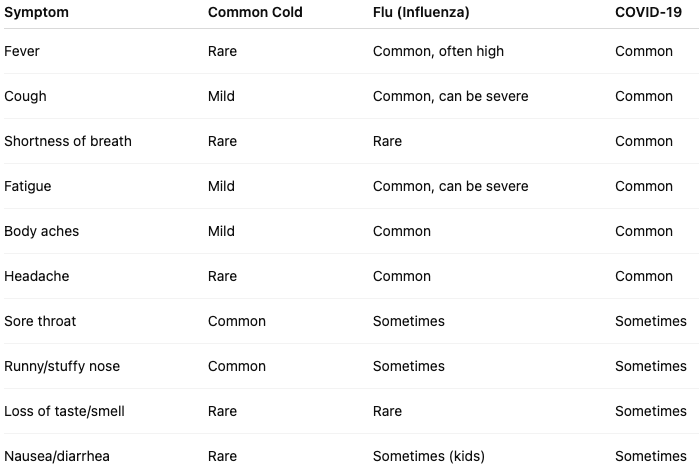
Flu (Influenza) Facts and Symptoms:
The flu, or influenza virus, is a contagious viral infection that primarily affects the respiratory system. It spreads easily from person to person, often through droplets when an infected person coughs or sneezes.
The flu is common in fall and winter. It can cause serious health problems and is high risk, especially for young children, older adults, and people with compromised immune systems.
Getting the flu vaccine each year is one of the best ways to protect yourself and others.
The onset of the flu is 1-4 days after exposure, and symptoms are sudden and abrupt.
Flu Common Symptoms:
- Fever or chills
- Cough
- Sore throat
- Runny or stuffy nose
- Muscle or body aches
- Headaches
- Fatigue
- Vomiting or diarrhea
Common Cold Facts and Symptoms:
The common cold is a viral infection that primarily affects the upper respiratory tract.
Several different viruses cause it, with rhinoviruses being the most prevalent.
Colds are very contagious. They can spread through droplets when an infected person coughs or sneezes. Touching infected surfaces can also lead to catching a cold.
The onset of a cold is 1-3 days after exposure. Symptoms are gradual in their progression.
Symptoms of the Common Cold:
- Runny or congested nose
- Sore throat
- Cough
- Sneezing
- Mild headache
- Fatigue
- Mild body aches
- Low-grade fever (sometimes)
COVID-19 Facts and Symptoms:
COVID-19, caused by the novel coronavirus SARS-CoV-2. The virus mainly transmits via respiratory droplets when an infected individual coughs, sneezes, speaks, or breathes. Additionally, it can spread by touching virus-contaminated surfaces and then touching one’s face.
The virus has had many mutations and variants over the years. These can cause similar but different symptoms.
Onset is generally 2-14 days after exposure. It can be gradual or sudden. Some variants are 2-5 days after exposure.
You can take steps to stay safe. Wear masks, keep a distance from others, wash your hands often, and get the COVID-19 vaccine. Vaccines have proven effective in reducing the severity of illness and transmission.
Symptoms of COVID-19:
- Fever or chills
- Cough
- Shortness of breath or trouble breathing
- Fatigue
- Muscle or body aches
- Headache
- New loss of taste or smell
- Sore throat
- Congestion or a runny nose
- Nausea or vomiting
- Diarrhea
Seek Care for A Cold, Flu, or COVID-19:
At times, distinguishing between these viruses can be challenging, as many of their symptoms often coincide or overlap. Here is how urgent care can help you:
- Rapid testing for Flu and COVID-19
- Rules out other viruses or causes of symptoms
- Provide antivirals if needed.
- Prescribe antibiotics when necessary
- Low-Dose X-Rays on site
- Nebulizer treatments for respiratory ailments
- OTC recommendations
- Annual Flu vaccines
- IV fluids for mild dehydration